
Aug 12 , 2026
ReTune Research Showcased at the EAN Congress 2026
Researchers from the Collaborative Research Centre ReTune contributed to this year’s Congress of the European Academy of Neurology (EAN), held from 27 to 30 June 2026 in Geneva, Switzerland. The EAN Congress is one of the largest international events dedicated to brain and neurological health, with more than 2,000 abstracts presented this year. The congress brought together clinicians and researchers from across the continent to discuss the latest developments in neurological research and patient care, including practical clinical sessions on topics such as botulinum toxin therapy and genetic counselling — providing a broad overview that was particularly valuable for clinician-scientists. Major themes included artificial intelligence in neurology, gender aspects of neurological diseases, and the impact of climate change on neurological health, a topic that felt especially timely as a severe heatwave settled over the congress itself.
Several ReTune researchers presented their latest work on adaptive neuromodulation, electrophysiological biomarkers, dystonia, and Parkinson’s disease, highlighting the consortium’s translational approach to improving therapies for movement disorders.
Adaptive Deep Brain Stimulation in Focus
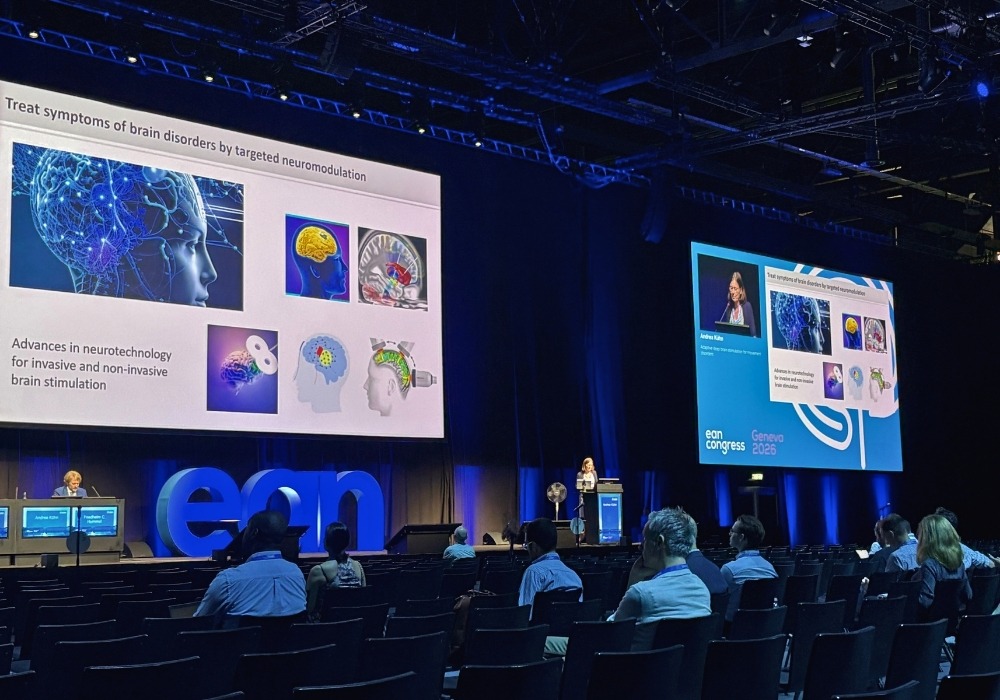
ReTune spokesperson Prof. Dr. Andrea Kühn presented recent advances in adaptive deep brain stimulation during the session “Innovations in Neurology: From Brain Machine Interface to AI.” Adaptive DBS aims to tailor stimulation to a patient’s current brain activity by using electrophysiological biomarkers, representing an important direction in the development of more personalized neuromodulation therapies.
David Marsden Award for Roxanne Lofredi
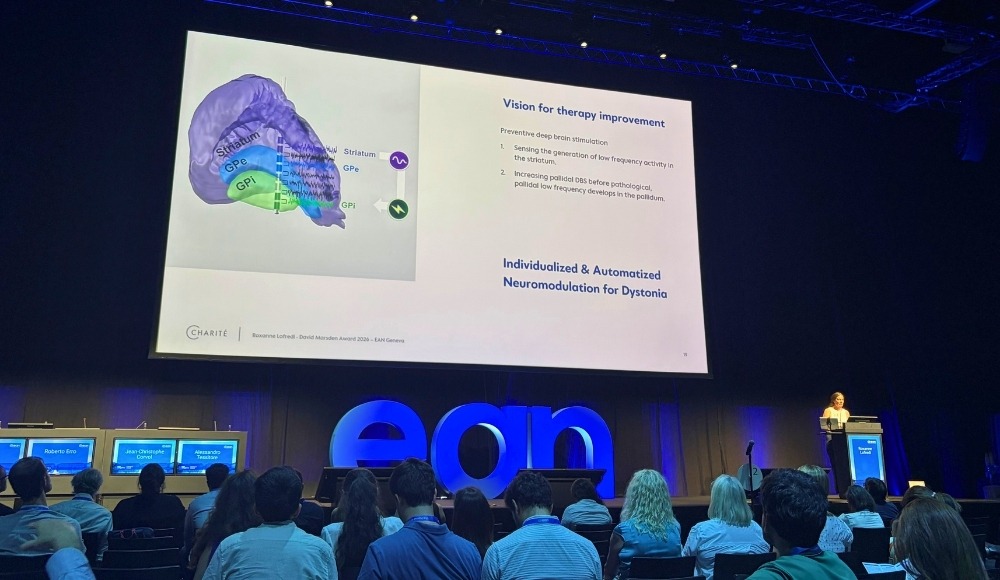
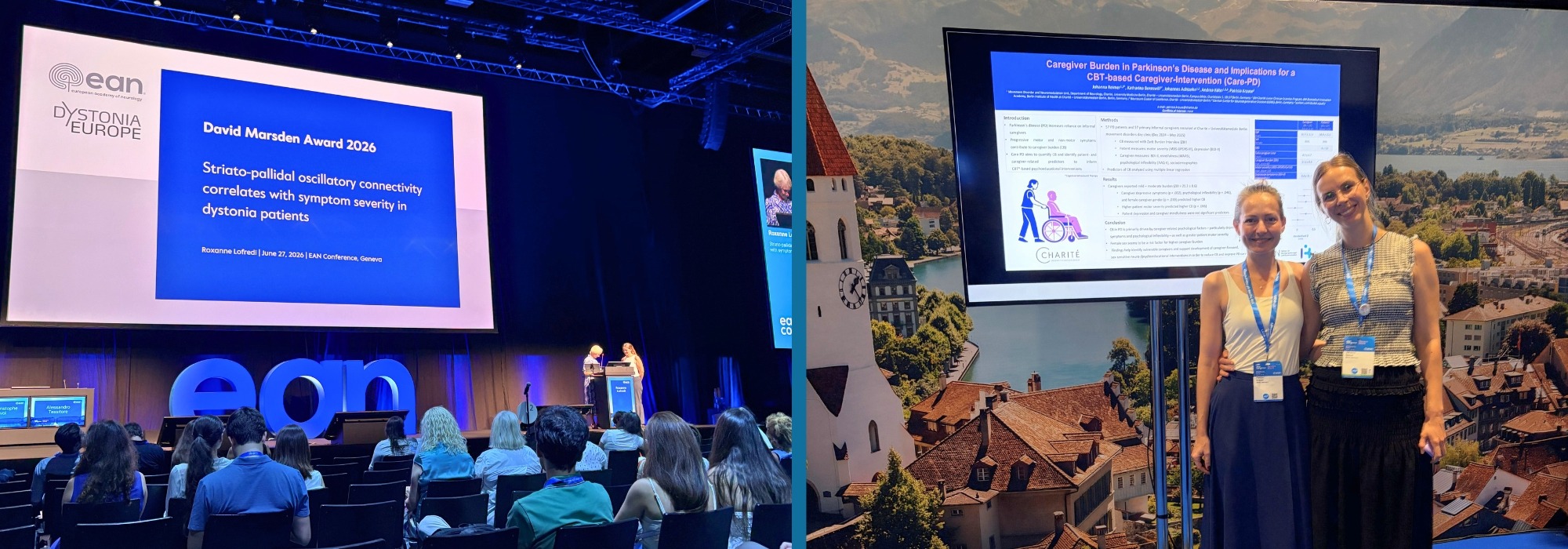
A particular highlight of the meeting was the recognition of ReTune principal investigator Dr. Roxanne Lofredi with the Dystonia Europe David Marsden Award, presented during a session of the European Basal Ganglia Club. The award honoured her work on striato-pallidal oscillatory connectivity and its correlation with symptom severity in dystonia patients, published in Nature Communications. The study provides important insights into network-level mechanisms underlying dystonia and their relationship to clinical symptoms.
New Biomarkers for Pediatric Dystonia
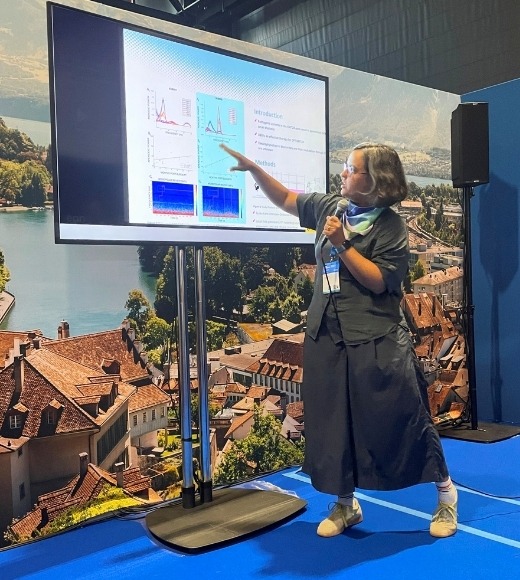
In a poster presentation, ReTune researcher Dr. Lucia Feldmann presented results from the COMEDD (Chronical Outcome Monitoring in Dystonia with Deep Brain Stimulation) study, investigating chronic electrophysiological biomarkers in two children with KMT2B-related dystonia following deep brain stimulation. The first results showed low-frequency modulation during the first twelve months after surgery.
The COMEDD study aims to identify biomarkers that may support improved DBS programming and, in the long term, contribute to the development of adaptive stimulation strategies for dystonia. Dr. Feldmann’s work reflects ReTune’s broader research focus on chronic biomarker monitoring and personalized neuromodulation.
Supporting Caregivers of People with Parkinson’s Disease
In another poster presentation, Dr. Johanna Reimer presented work conducted together with ReTune principal investigator Dr. Patricia Krause on the Care-PD project, which focuses on supporting caregivers of people living with Parkinson’s disease. The programme includes cognitive behavioural interventions tailored to caregivers.
First analyses of participants attending the day clinic showed a moderate caregiver burden that was associated with psychological factors, female sex of the caregiver, and disease severity of the affected spouse. These findings provide an important basis for developing more personalized support programmes for both patients and their caregivers.
Translating Research into Better Therapies
The ReTune contributions at EAN 2026 spanned fundamental insights into disease mechanisms, novel electrophysiological biomarkers, and clinical applications of deep brain stimulation and patient-centred care — reflecting the consortium’s interdisciplinary approach to movement disorders research.
© Picture: TRR 295 ReTune