

Oct 16, 2025
As part of the first Fall School of the second funding period we (Yunyou Tang and Öykü Okur) conducted a session on equal opportunities. During this one-hour session, we focused on topics raised in the documentary movie “Picture a Scientist” by posing the question: What are the hidden struggles faced by underrecognized groups in science? [1] The documentary primarily investigates gender inequality in science through the stories of women scientists, including the verbal abuse and power dynamics encountered by Dr. Jane K. Willenbring (Professor of Geology at Stanford University), the under-recognition experienced by Dr. Nancy Hopkins (Professor of Biology at MIT), and the microaggressions faced by Dr. Raychelle Burks (Associate Professor at American University) as a woman of color. While many of these issues are widely recognized today, the documentary reminds us that this has not always been the case and addressing them remains challenging.
One of the turning points in addressing gender inequality in science occurred in 1994. The documentary introduces us to the “MIT report” through the words of one of its authors: Dr. Nancy Hopkins. This report was written by tenured women scientists at MIT and draws attention to structural discrimination in science. Their data show leakage in the system: although the women-to-men ratio is close to 1 at the undergraduate level in most science faculties, this ratio declines at each subsequent career stage. Most strikingly, they reported that the percentage of women in the science faculty was 8% and had not changed for more than a decade. (Image 1) [2][3]
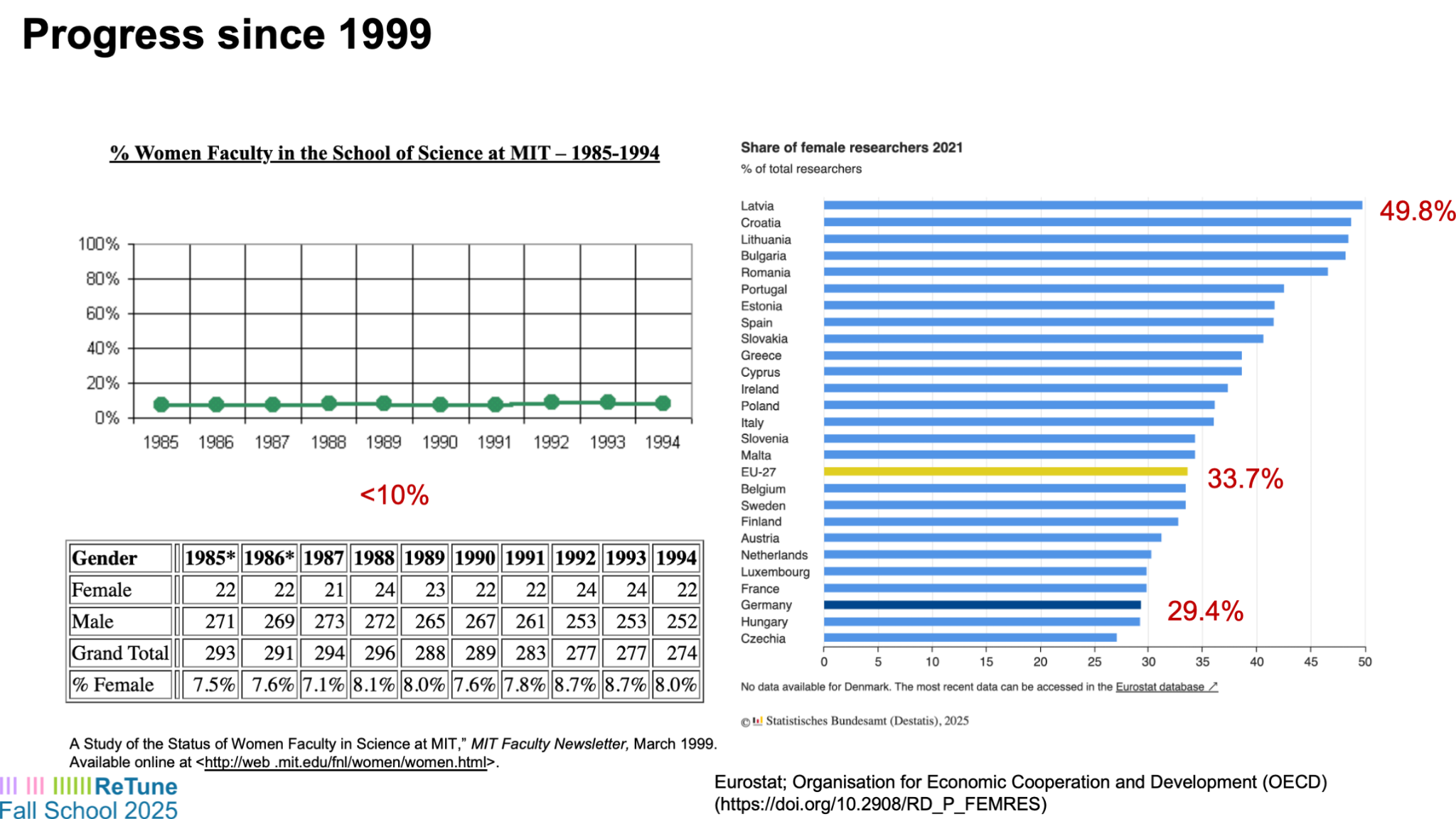
Image 1. Data from MIT report (1994) and OECD (2021) showing percentage of female researchers. [1][4]
In response to the request of the MIT Report, MIT established the Committee on Women Faculty in the School of Science. This committee further collected data and conducted interviews to investigate the issue. These investigations allowed recognition of the invisible problems –such as unequal access to resources, lack of recognition and visibility, underpayment, and family-related pressures on women scientists –and led to steps in 1995 and in the upcoming years to improve the conditions and representation of women faculty at MIT. [2]
Turning to the present, recent data continue to report the leaky pipeline and the persistence of the previously mentioned problems experienced by underrepresented groups in academia. According to the report on women in German research organizations (Gleichstellungsmonitor 2023/2024), the proportion of women professors increased from 21.3% in 2013 to 28.8% in 2023; however, the leaky pipeline persists. Although women share half of the student or graduate level positions, their representation declines to 46% at the doctoral level, 37% at the habilitation level, 29% among mid-level (W2) and 25% among senior (W3) professorship, compared with 49% at the junior professorship (W1) level [5][6]. Furthermore, qualitative studies of women postdoctoral researchers worldwide highlight similar problems, including sexism, microaggressions, and family or work-life related pressures. [7]
Moving towards the solution, the first step is the recognition of the problem. This involves asking critical questions and openly discussing what lies under the tip of the iceberg. To this end, we introduced each topic addressed in the documentary –under-recognition, microaggression, power dynamics, bystander effect, and code switching–to the attendees of the Fall School, who were early career researchers (PhD students in majority). We then anonymously surveyed the participants whether they had experienced these issues in their academic environments. (Image 2)
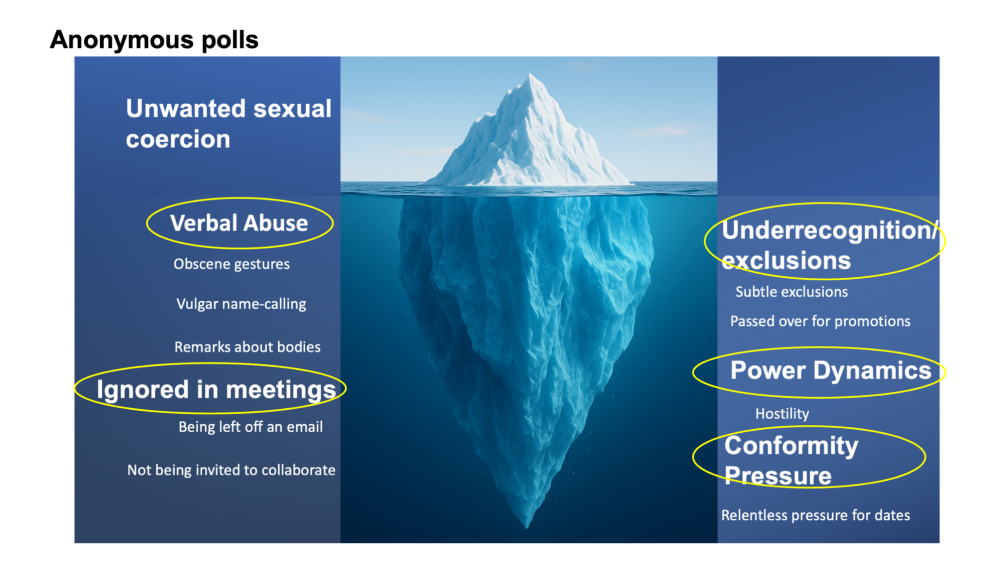
Image 2. Below the tip of the iceberg is highlighting the hidden struggles faced by underrecognized groups in science. Adapted from Picture a Scientist (2020)
Among the 34 participants, 44% reported feelings of under-recognition, and 35% reported experiencing being ignored or microaggressions in meetings or conferences. Furthermore, 73% of the participants reported that they sensed power dynamics at play in their work environment. Seventy-six percent reported having done code switching (i.e. changing one’s appearance or behaviour to “fit in””) at least once in their work environment. Finally, 18% reported experiencing verbal abuse in their work environment. While these figures help us recognize the problem in our own work setting, we did not ask information on participants’ gender or other background information. (Image 3)
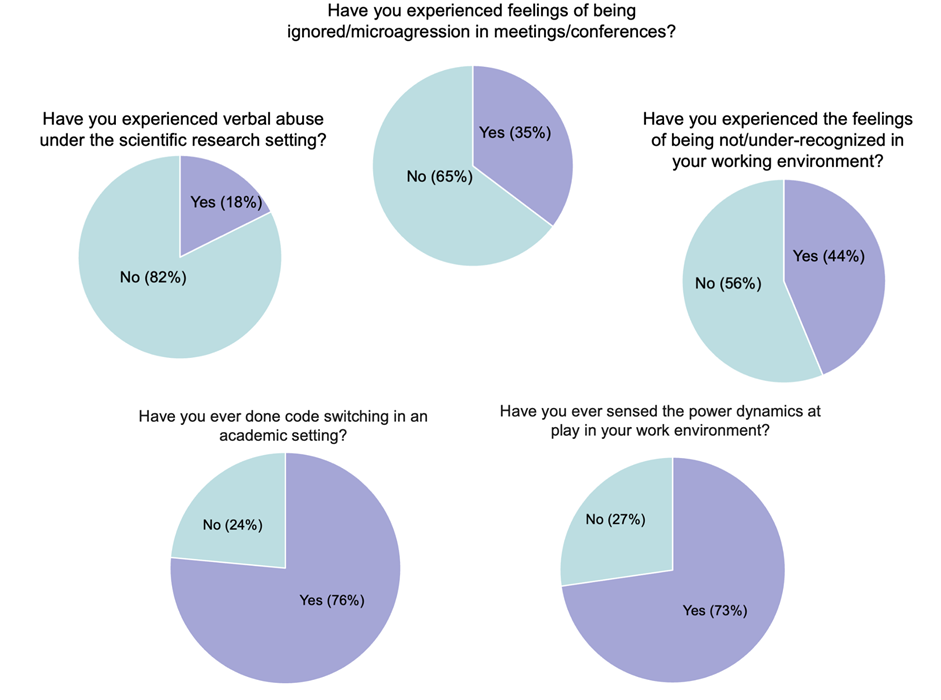
Image 3. Anonymous survey results from the Fall School.
At the end of the session, we opened the floor for a general discussion. Many participants expressed interest in the topic and actively engaged by asking or answering questions. The session proved to be both highly engaging and important for the Fall School. As individuals at early stages of our scientific careers, many of us have already recognized these challenges and are willing to reflect further on them. Importantly, several participants also raised ideas about potential solutions and discussed what could be done to improve conditions within our SFB or institutions. (Image 4) We are grateful that the Retune SFB values research on equal opportunities and made this session possible.
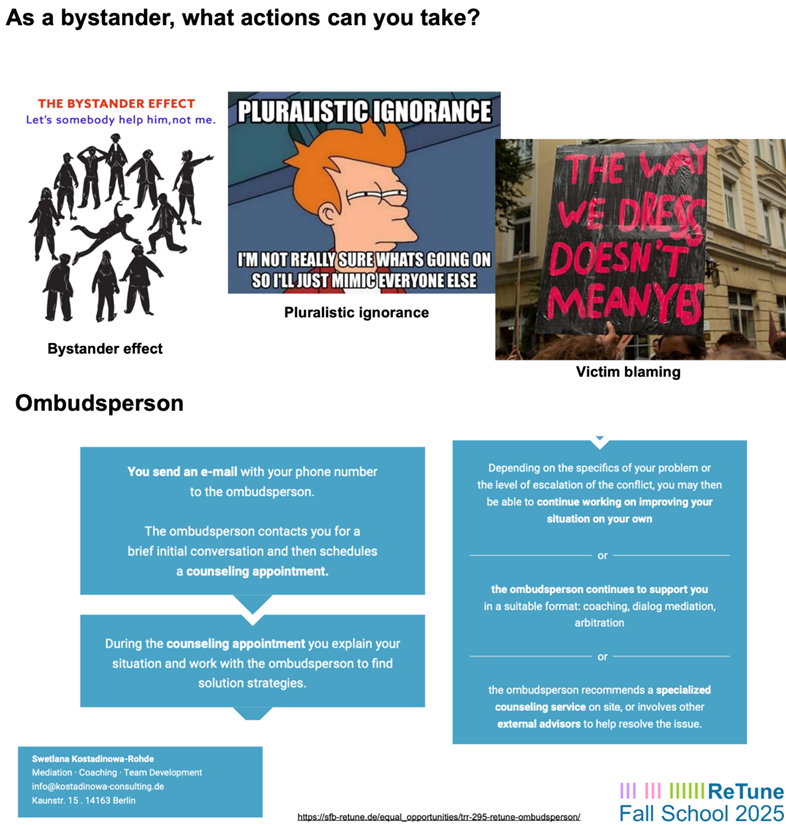
Image 4. Potential solutions to the hidden issues faced by scientists (Image 2).
Blog written by Öykü Okur (A04)
Slides & material by Yunyou Tang (B07)
Presentation by Yunyou Tang (B07)
References:
[1] Cheney, I., & Shattuck, S. (Directors), & Pottle, M. (Producer). (2020). Picture a scientist [Film]. PBS.
[2] Massachusetts Institute of Technology. (1999). A study on the status of women faculty in science at MIT. The MIT Faculty Newsletter, 11(4). https://web.mit.edu/fnl/women/women.html
[3] Hopkins, N. (1999). MIT and gender bias: Following up on victory. Tufts University, the Chronicle of Higher Education. Retrieved December 22, 2025 from https://www.cs.tufts.edu/comp/150FP/archive/nancy-hopkins/mit-gender.html
[4] Eurostat; Organisation for Economic Co-operation and Development (OECD). Share of female researchers by sector of performance (rd_p_femres). Accessed 10 October 2025. https://ec.europa.eu/eurostat/databrowser/product/page/rd_p_femres
[5] Gemeinsame Wissenschaftskonferenz (GWK). (2025). Gleichstellungsmonitor Wissenschaft und Forschung: 29. Datenfortschreibung (2023/2024) zu Frauen in Hochschulen und außerhochschulischen Forschungseinrichtungen (Heft 94). Bonn: GWK. Retrieved from https://www.gwk-bonn.de/themen/weitere-arbeitsgebiete/chancengerechtigkeit
[6] Gemeinsame Wissenschaftskonferenz (GWK). (2025, October 16). „Gleichstellungsmonitor Wissenschaft und Forschung“: „Leaky Pipeline“ bleibt zentrale Hürde für Exzellenz und Chancengleichheit im deutschen Wissenschaftssystem [Press release]. Retrieved from https://www.gwk-bonn.de/themen/weitere-arbeitsgebiete/chancengerechtigkeit
[7] Ysseldyk, R., Greenaway, K. H., Hassinger, E., Zutrauen, S., Lintz, J., Bhatia, M. P., Frye, M., Starkenburg, E., & Tai, V. (2019). A leak in the academic pipeline: Identity and health among postdoctoral women. Frontiers in Psychology, 10(JUN), Article 1297. https://doi.org/10.3389/fpsyg.2019.01297