


Jan 21, 2025
Communication and Status:
High- and Low-Status Communication in Collaborative Research
by Öykü Okur & Jil Meier
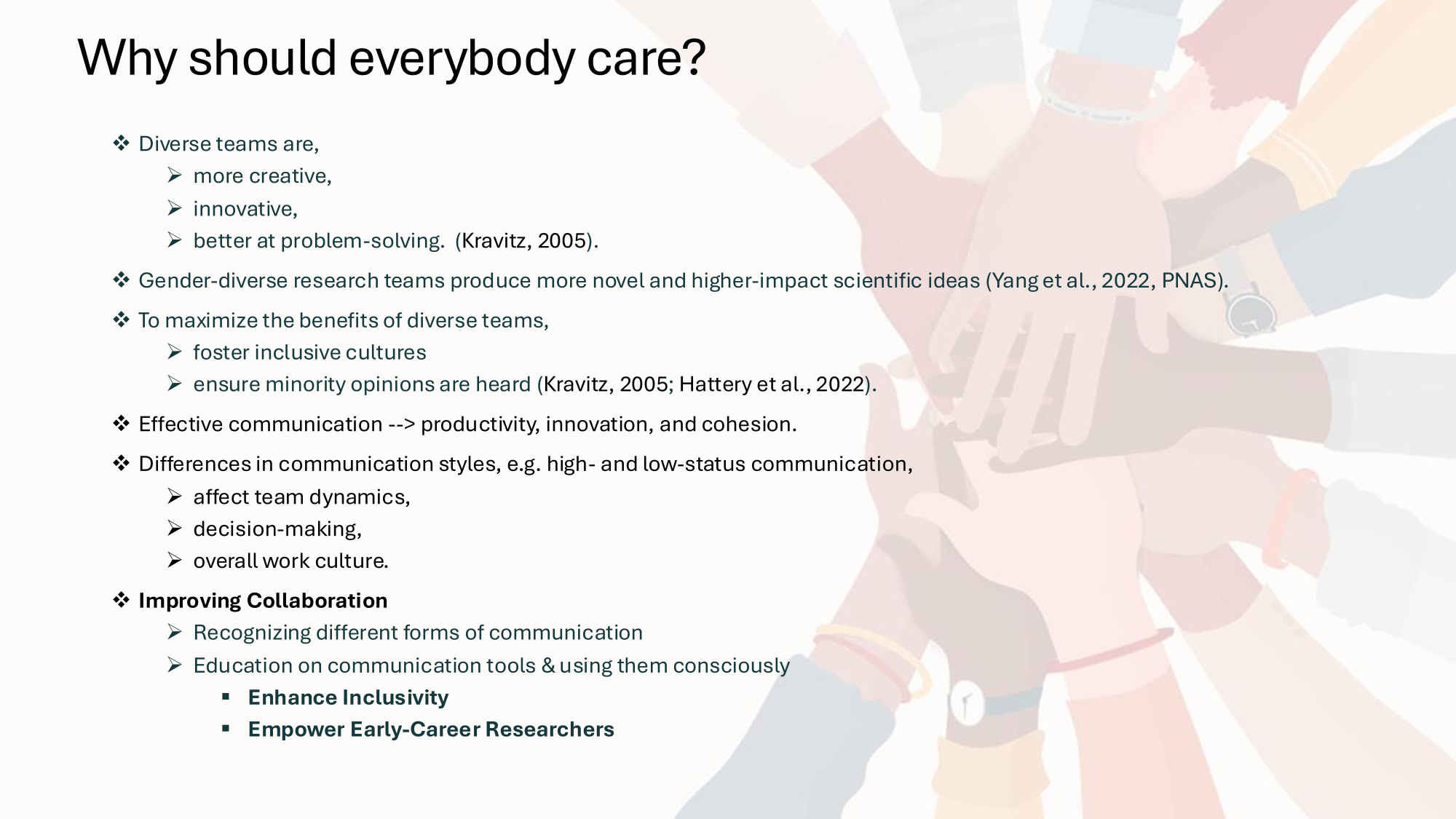
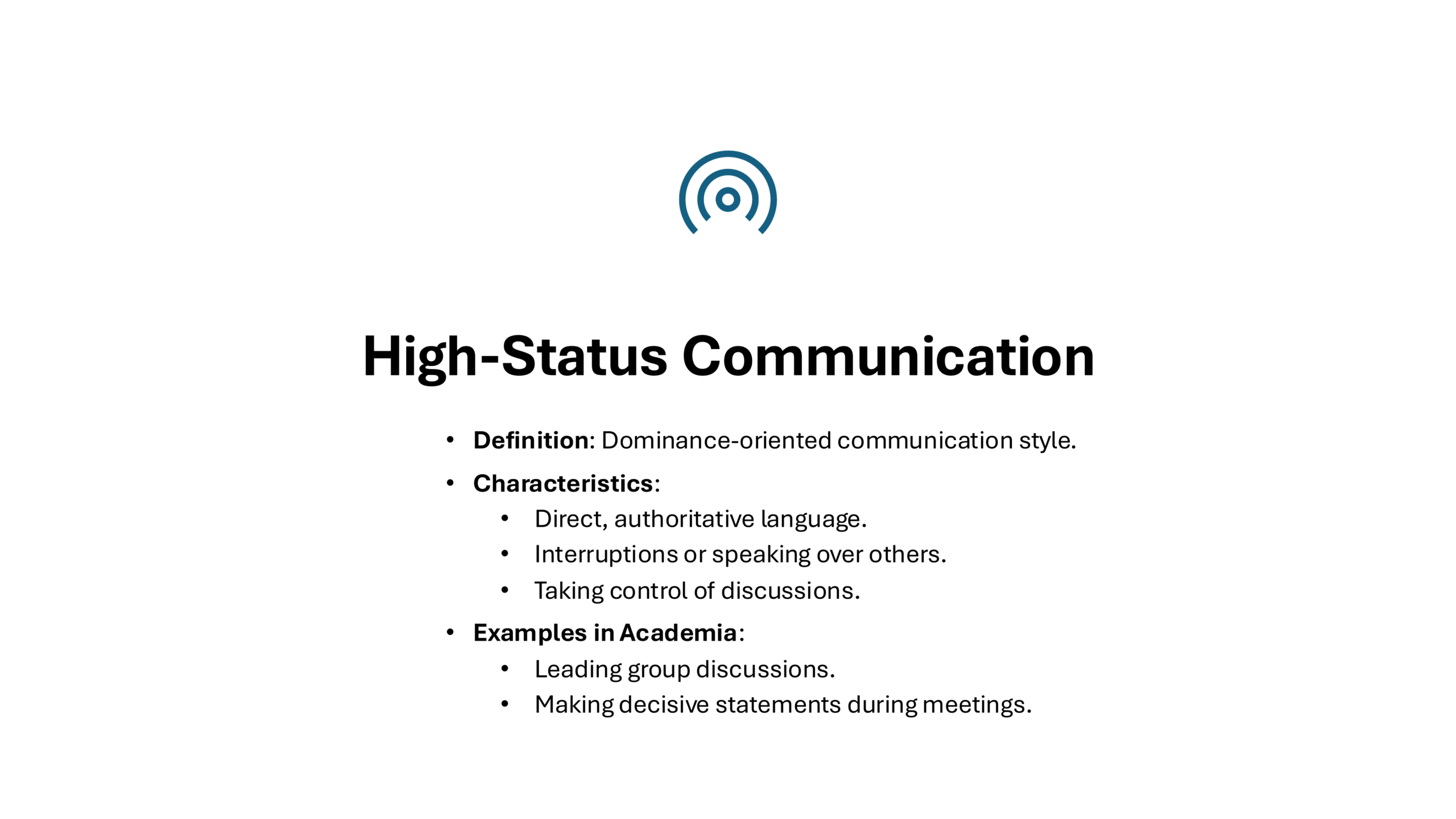
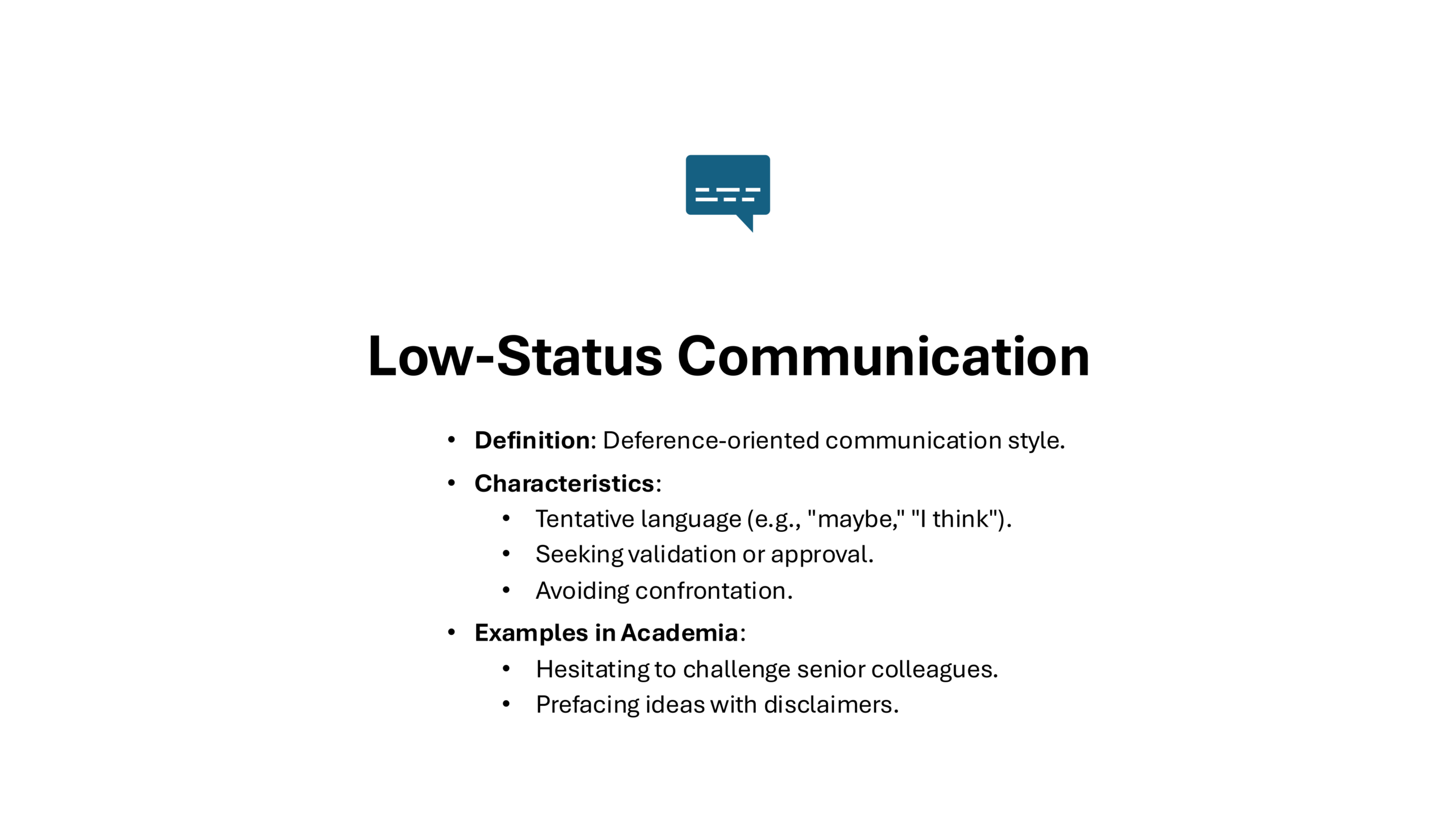
In the first equal opportunity meeting of the second funding period, Öykü Okur and Dr. Jil Meier gave an interactive presentation about high- and low-status communication in collaborative research. In the first part of the talk, Öykü Okur assessed the background of the audience on the topic with an interactive and anonymous poll. Among the participants, 35% had never attended a workshop on communication, and 61% did not know about high-/low-status communication. In the following minutes, evidence from the literature for the importance of diversity and inclusion in the collaborative research is presented. Communication diversities, such as high-/low-status communication, are impactful for our research environments. To be able to recognize and use this tool consciously and allow inclusivity in the CRC ReTune, presenters introduced the high-/low-status communication together with a role play used in improvisation theatre. Afterward, the audience was introduced to characteristics of a high-status (dominance-oriented communication style) and low-status communication (deference-oriented communication style), and day-to-day examples they appear in the dialogues of collaborative research.
Status in communication can be signalled not only through different choices of words or content but also through gestures, facial expressions, eye contact or the lack thereof, differences in pronunciation, intonation, speed accelerations or pauses, body language, status symbols and/or the usage of space. Simple changes in any of these tools can enable a status change and create status flexibility, while these changes can simultaneously create a mental interaction with ourselves (e.g. ‘power poses’).
Stereotypes about status are often mingled with stereotypes about gender, e.g. assertiveness in females and the word “bossy”. These stereotypes are limiting our status flexibility. While status behavior can be utilized intentionally in e.g. negotiations, most of the time our status behavior is unconscious. This entails that communication processes occur verbally and non-verbally and are mostly happening unconsciously. In addition, some people are not used to high-status communication, some are not used to low-status communication. Therefore, the presenters advocated for self-reflective behavior.
After an excursion on the fact that status behavior is present in animals and not unique to humans, the impact of status communication on team dynamics in collaborative research was discussed. The message was again discussed that flexibility in status behavior is beneficial for team dynamics to signal a balance between respect/assertiveness and openness/approachability.
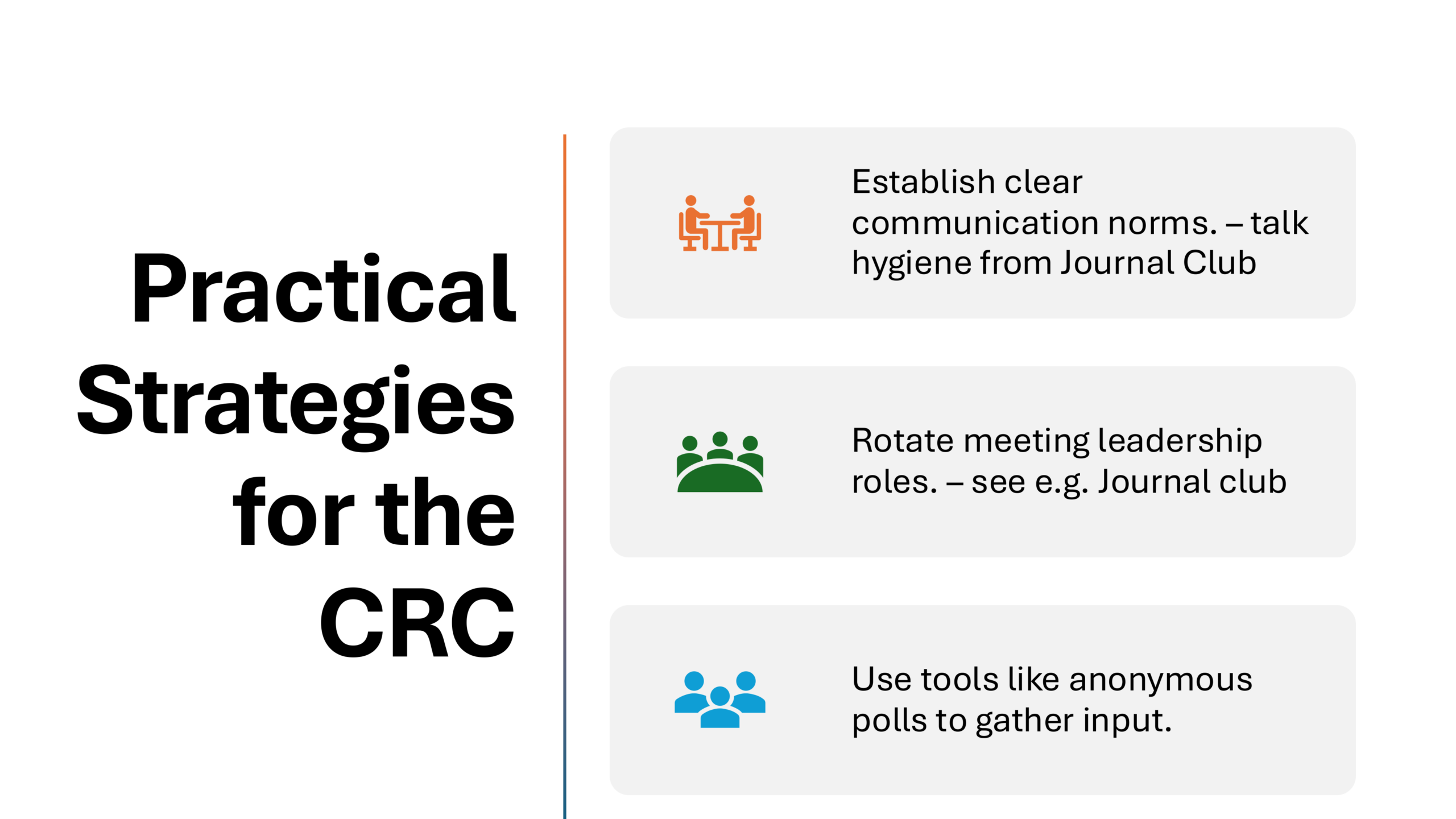
Following the introduction of tools associated with high-/low-status communication, the audience was grouped in pairs into break-out rooms and instructed with example dialogues for an improvisation-style role-play. The dialogues were from common dialogues within the CRC ReTune, and the task of each participant was to repeat the same dialogue as a low-status communicator and a high-status communicator with their partners in the opposing role. This allowed practicing and balancing both communication styles consciously, as well as to recognize how they may impact our collaboration and research if not used consciously.
As a last important aspect for the collaborative research within our international CRC, cultural differences were discussed with regard to status communication and inherent differences of hierarchical/power distance. Countries with higher power distance – according to the research of Prog. Hofstede – embrace hierarchy and the unequal distribution of power within institutions (e.g. within the family) more willingly than other countries with lower power distance. Lastly, some examples of cultural differences with respect to signalling status in communication were discussed, e.g. while eye contact with superiors is encouraged in the US or in The Netherlands, it may rather be avoided in Japan as a sign of respect.
The slides are available upon request (jil-mona.meier@bih-charite.de and oeykue.okur@charite.de) and the full list of references discussed during the talk is below.
Sources:
- Charité Mentoring Program for female researchers (https://mentoring.charite.de/en/for_female_scientists/) : Coaching ”Kommunikation und Status” by Deborah Ruggieri: https://www.deborah-ruggieri.com/training-coaching/
- Kravitz, D.A., 2005. Diversity in teams: A two-edged sword requires careful handling. Psychological Science in the Public Interest, 6(2).
- Hattery, A.J., Smith, E., Magnuson, S., Monterrosa, A., Kafonek, K., Shaw, C., Mhonde, R.D. and Kanewske, L.C., 2022. Diversity, equity, and inclusion in research teams: The good, the bad, and the ugly. Race and Justice, 12(3), pp.505-530
- Yang, Y., Tian, T.Y., Woodruff, T.K., Jones, B.F. and Uzzi, B., 2022. Gender-diverse teams produce more novel and higher-impact scientific ideas. Proceedings of the National Academy of Sciences, 119(36), p.e2200841119.
- Fernald, R.D., 2014. Communication about social status. Current opinion in neurobiology, 28, pp.1-4.
- https://geerthofstede.com/culture-geert-hofstede-gert-jan-hofstede/6d-model-of-national-culture/
- https://www.leadion.de/2012/12/13/der-status/
- “Impro: Improvisation and the Theatre” by Keith Johnstone (1981)
More interesting resources concerning this topic:
- Movie scene from “Borgen” with explanations on status and power tools: https://www.youtube.com/watch?v=r41du3mLZhU&t=125s&ab_channel=MartinaGleissenebner-Teskey
- Talk by Deborah Gruenfeld: “Power & Influence”https://www.youtube.com/watch?v=KdQHAeAnHmw&ab_channel=StanfordGraduateSchoolofBusiness
- Jason Capitol, “Higher Status: The New Science of Success and Achievement”, 2017
- Amy Cuddy Ted Talk: “Your body language shapes who you are” http://www.ted.com/talks/amy_cuddy_your_body_language_shapes_who_you_are.html
- “Inference of Attitude from Nonverbal Communication in Two Channels” The Journal of Counselling Psychology 31, S. 248-252, 1967