
April 15, 2025 | 4 pm | Hörsaal Neurologie
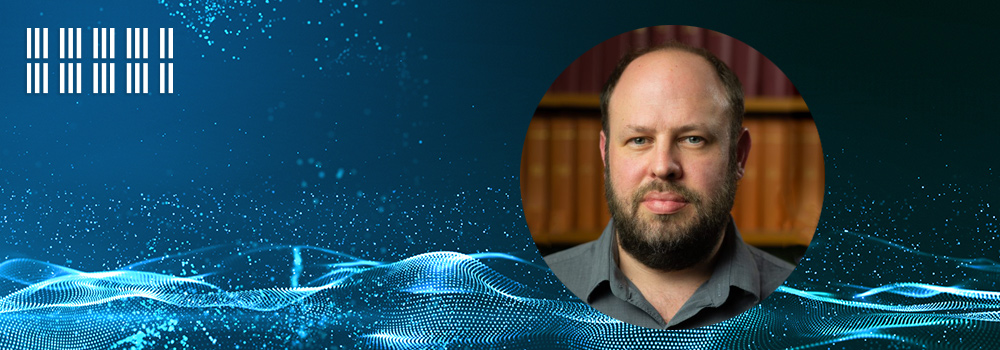
Andrew Sharott
Towards Closed-Loop Deep Brain Stimulation For The Treatment of Alzmeiner’s Disease.
Alzheimer’s disease (AD) has very limited treatment options and therapies to prevent or reverse neurodegeneration remain elusive. Deep brain stimulation (DBS), whereby high-frequency pulses of electricity are delivered continuously to a specific part of the brain, has been trialled as an experimental treatment for AD. In AD patients, DBS has been targeted at a group of fibres called the fornix, which carry signals to and from the hippocampus; a crucial region for encoding and recalling memory. Fornix-DBS has been shown to be safe and modulate hippocampal markers of synaptic plasticity, but is not reliably effective when delivered using the standard, continuous high frequency pulses that are effective in other disorders.
We propose that a different approach is required in AD, whereby closed-loop stimulation is used to restore key activities disrupted by the primary degenerative process. Closed-loop stimulation uses real-time tracking of specific aspects of neural signals to control when electrical pulses are delivered. DBS delivered in this way would act like a network prosthesis, compensating for circuit-level activities that the diseased memory circuits can no longer provide. To this end, we have developed and utilised methods of real-time tracking of hippocampal oscillations (theta/sharp-wave ripples) to control the timing of electrical stimulation of the fornix of freely moving rats, using lightweight algorithms that can readily be employed in human devices.
Our results demonstrate that such approaches allow the precise modulation of the synchronisation of hippocampal neurons towards states aligned with the facilitation of memory performance, providing a rationale for a closed-loop approach to DBS for AD.
About the Speaker: Dr. Andrew Sharott graduated in Neuroscience at the University of Nottingham in 2001. He continued with PhD studies at the University College London to study in Neurological Studies, with a focus on oscillations in the basal ganglia network, under the supervision of Professor Peter Brown. In 2005, Dr. Sharott did his postdoctoral work at the University Medical Centre, Hamburg-Eppendorf, with Professor Andreas Engel. As a Marie Curie Experienced Researcher in Hamburg, Dr. Sharott continued to study oscillations in the basal ganglia, including recordings from patients undergoing the implantation of deep brain stimulation electrodes for the treatment of Parkinson’s disease. In summer 2009, Dr. Sharott moved to Oxford and become an MRC Investigator Scientist to work in the Magill Group, where his research examined the role of striatal neurons in the dopamine-intact and Parkinsonian brain. In 2015, Andrew was promoted to MRC Programme Leader and in 2018 he joined Green Templeton College as a Research Fellow. In 2023, he was conferred the title of Professor of Neuroscience and was awarded a Einstein BUA/Oxford Visiting Fellowship at the Charité University in Berlin.
Adapted from, https://www.mrcbndu.ox.ac. uk/people/prof-andrew-sharott This invited talk is hosted by SFB1315 Assoc PI Silvia Viana da Silva and is jointly hosted by TRR295.