
Feb 3, 2026
Spatial signature of low-frequency network changes accounts for pallidal stimulation outcome in cervical dystonia.
Bahners BH, Lofredi R, Voss H, de Almeida Marcelino AL, Goede LL, Feldmann LK, Schnitzler A, Sander TH, Florin E, Kühn AA.
EBioMedicine. 2026 Feb; 124: 106140.
doi: 10.1016/j.ebiom.2026.106140. Epub 2026 Jan 28. PMID: 41611586; PMCID: PMC12905622.
Download summary: ReTune PoM 2026 Jan
Cervical dystonia is a common form of dystonia characterized by involuntary muscle neck contractions, which can lead to abnormal head postures, tremor, and pain. In therapy-refractory cases, deep brain stimulation (DBS) of the internal globus pallidus is an established treatment option. Although this therapy produces clear clinical improvements in many patients, the underlying neurophysiological mechanisms are not yet fully understood. Evidence from neurophysiological and neuroimaging studies suggests that dystonia is a network disorder involving sensorimotor cortical areas, the basal ganglia, and the cerebellum. In particular, alterations in neuronal population activity in the low-frequency band are thought to play a central role in the pathophysiology of the disease. Additionally, previous studies have found that pallidal DBS suppresses these pathologically enhanced low-frequency oscillations and modulates sensorimotor and cerebellar networks in dystonia. However, anatomical and electrophysiological findings have rarely been linked, and it remained unclear whether oscillatory changes occur within the same networks identified in previous neuroimaging studies.
In the present study, we therefore investigated the neurophysiological network effects of pallidal DBS in patients with cervical dystonia. We acquired magnetoencephalography (MEG) recordings ON and OFF stimulation in 16 patients with cervical dystonia in Berlin and Düsseldorf. Specifically, we analyzed whether individual treatment outcomes are associated with a specific pattern of stimulation-induced changes in low-frequency activity across the entire cortex. Indeed, pallidal neurostimulation induced changes in cortical oscillatory activity with low-frequency suppression in the SMA being associated with clinical improvements. Additionally, a significant proportion of the variance in treatment response could be explained by a specific modulation pattern in the low-frequency range between 6–12 Hz (R = 0.77, p = 0.003). This pattern was characterized by desynchronization in the supplementary motor area (SMA) and the primary motor cortex, accompanied by simultaneous synchronization in prefrontal regions. Finally, low-frequency synchronisation in the postero-mesial cerebellar cortex, along with the overall cerebro-cerebellar pattern of changes, appeared to be relevant for DBS outcomes as well.
Our findings underscore the importance of low-frequency oscillations in dystonia not only within the basal ganglia but across the entire sensorimotor–cerebellar network and re-emphasize dystonia as a network disorder. Within the network we identified, DBS may suppress pathologically enhanced low-frequency activity in the SMA/motor cortex and might induce compensatory activation via enhanced cerebellar low-frequency activity. In the long term, these insights may help automate the achievement of optimal DBS outcomes and inspire approaches for non-invasive stimulation paradigms.
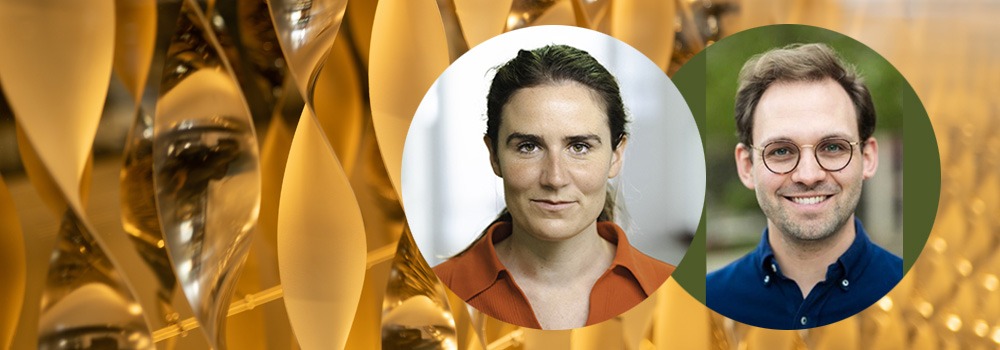
Dr. Bahne Bahners & Dr. Roxanne Lofredi
Bahners is a medical doctor in Florin’s lab in Düsseldorf. He uses MEG to study cortical electrophysiology in people with movement disorders treated with DBS. Lofredi is a neurology resident and junior group leader within the ReTune Consortium that focuses on investigaten spatio-temporal circuit patterns of motor and sensory symptoms in movement disorders.
Prof. Esther Florin & Prof. Andrea Kühn
Florin is a Lichtenberg Professor at the Heinrich Heine University Düsseldorf, and project leader with ReTune. In her research, she analyzes neural connectivity to understand cognition and behaviour in healthy subjects and neurological patients. Kühn is the ReTune Spokesperson. Her research on basal ganglia electrophysiology has majorly contributed to the understanding of the pathophysiology of movement disorders and the mechanisms of action of DBS.
PoMs 2025:
ReTune PoY 2025
ReTune PoM 2025 Dec
ReTune PoM 2025 Nov
ReTune PoM 2025 Oct
ReTune PoM 2025 Sep
ReTune PoM 2025 Aug
ReTune PoM 2025 Jul
ReTune PoM 2025 Jun
ReTune PoM 2025 May
ReTune PoM 2025 Apr
ReTune PoM 2025 Mar
ReTune PoM 2025 Feb
ReTune PoM 2025 Jan