


Mar 10, 2026
EO & work life balance:
Can both goals go together?
By Prof. Dr. med. Cordula Matthies
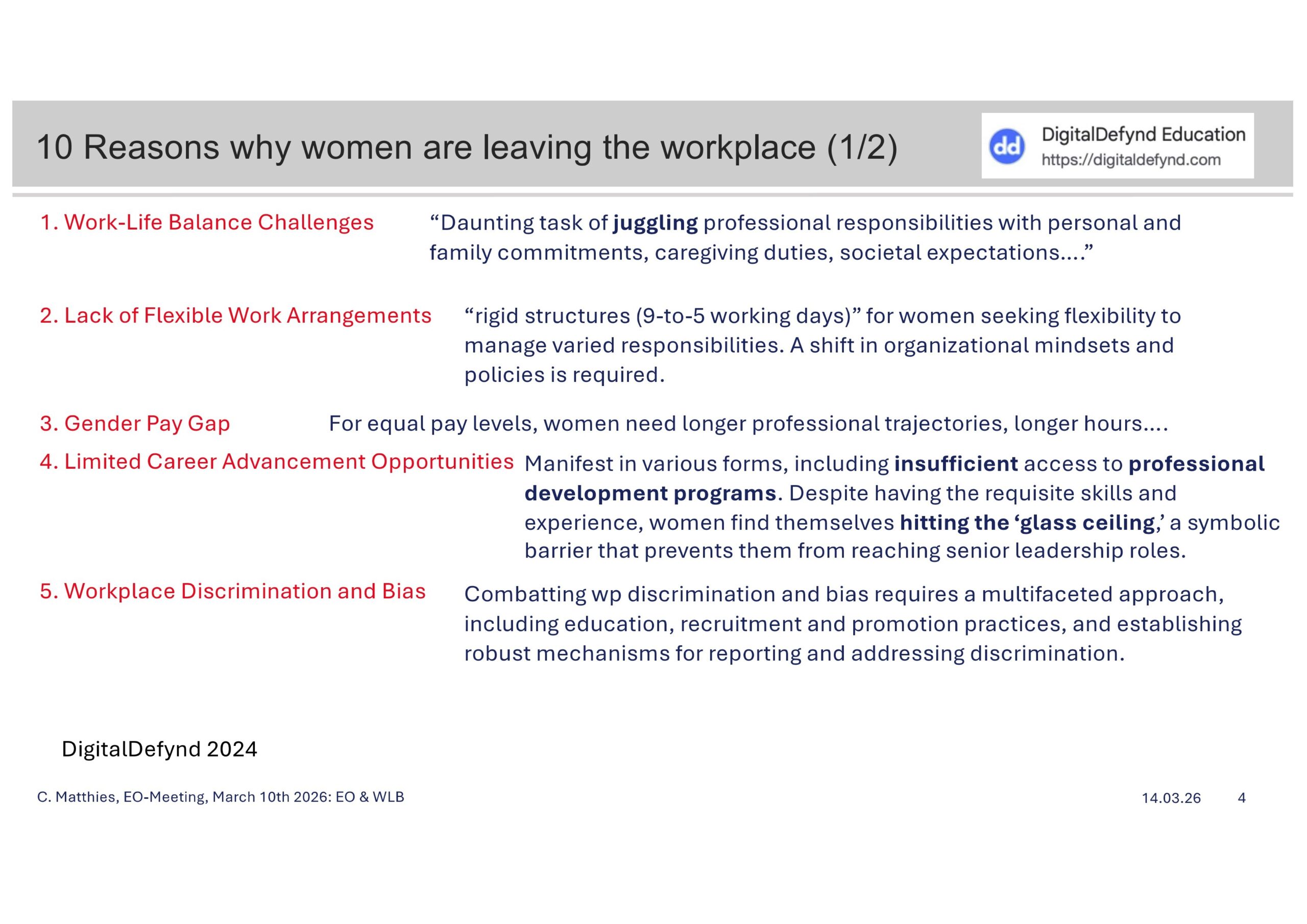
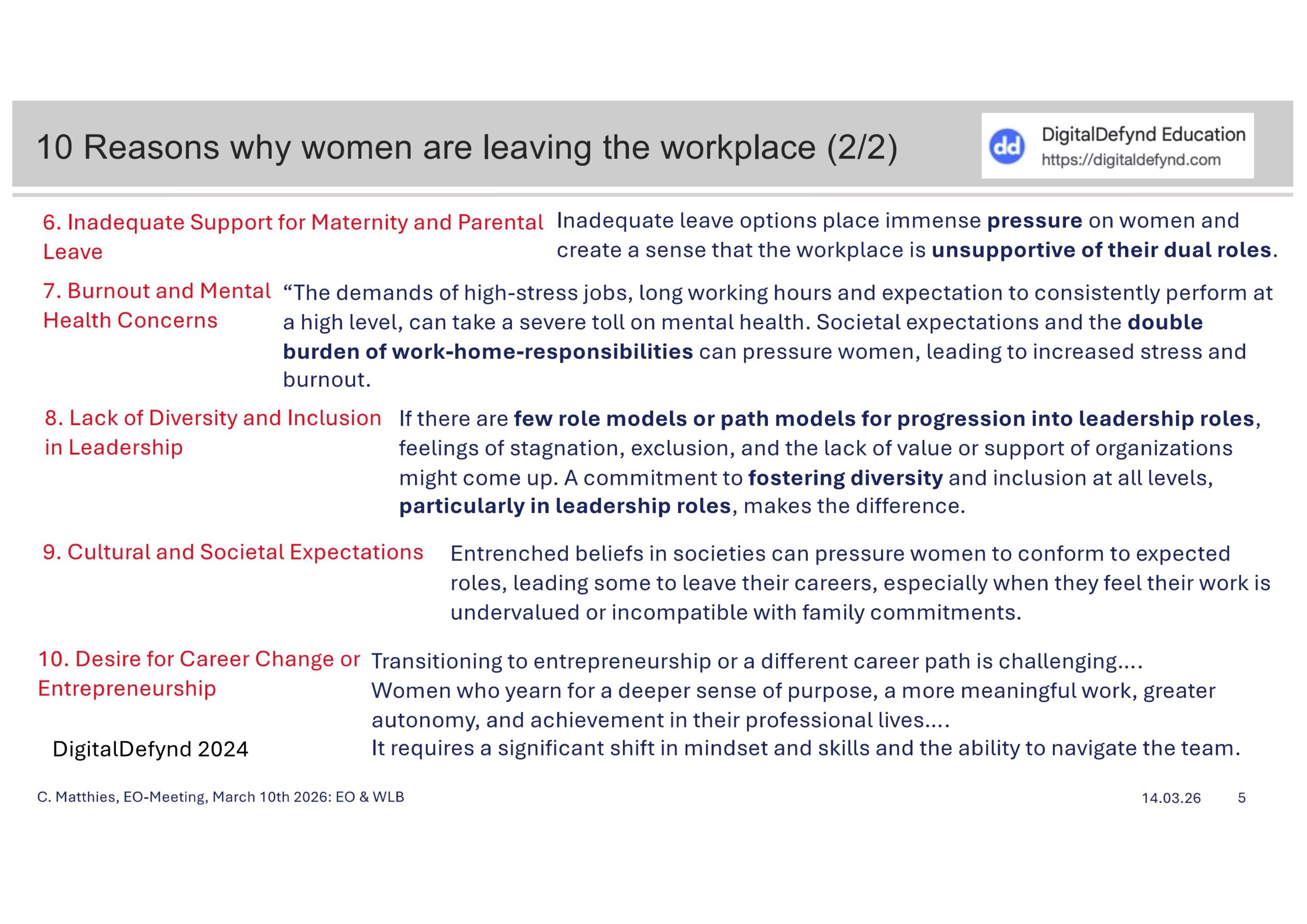
At the second Equal Opportunity Meeting of 2026, Prof. Dr. med. Cordula Matthies gave a thought-provoking presentation addressing an important question: Can the goals of equal opportunity and work–life balance truly be reconciled? The session began with an interactive moment in which participants were invited to reflect on their own views before the topic was explored in more depth. The discussion first focused on common reasons why women leave their workplaces or reduce their working hours. These include:
- challenges related to work–life balance
- a lack of flexible working arrangements
- the gender pay gap
- limited career advancement opportunities
- workplace discrimination and bias
- insufficient support during maternity and parental leave
- burnout and mental health concerns
- a lack of diversity and inclusion in leadership roles
- cultural and societal expectations
- the desire for career changes or entrepreneurship
Several studies presented during the meeting highlighted how these factors affect medical careers. One study showed that 77% of female urologists reduce their working hours or leave the clinic after starting a family. Reduced career expectations, the double burden of work and family responsibilities, and limited institutional support lead hospitals to lose highly qualified professionals. A survey conducted in 2022 illustrated the inequality in full-time employment: only 36.2% of female urologists with children work full time, compared with 92.4% of female urologists without children. The survey further revealed that only about one third of fully trained urologists and 20% of consultant urologists have children. Among these groups, 31.5% of urologists with children perform surgery, compared to 40.6% without children. Scientific work is carried out by 18% of those with children and 30.8% without children.
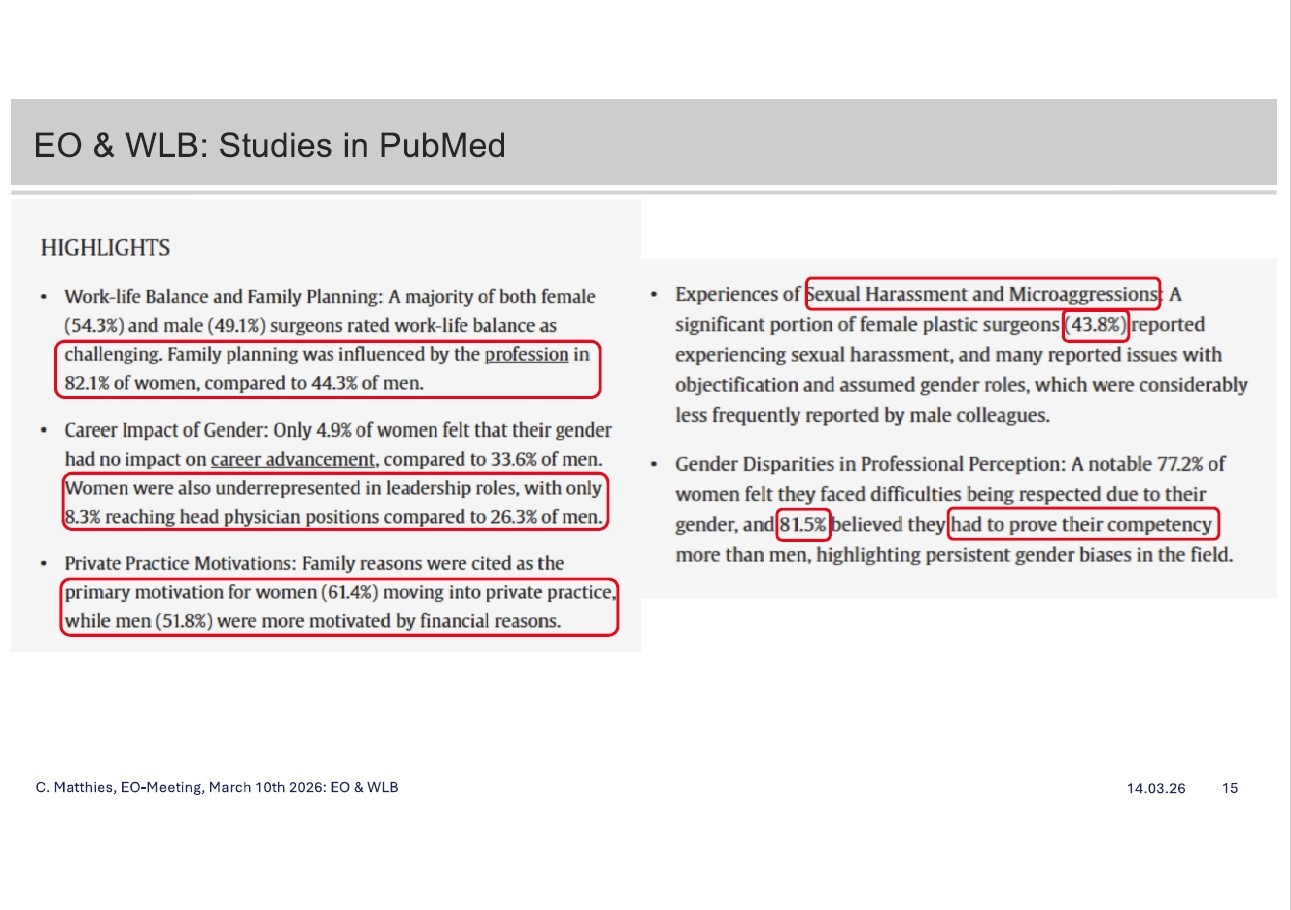
Another study pointed out that male surgeons often benefit from partners who work part-time and take on a large share of domestic responsibilities. In contrast, female surgeons show a higher incidence of childlessness. In dual-physician households, the female partner manages about 80% of family responsibilities, including organizing children’s schedules or caring for sick children, despite both partners working full-time in demanding professions. This imbalance has clear professional consequences. Women interrupt their training more frequently and often require longer residency periods. The study found that:
- 46% of board-certified surgeons and residents postponed having children for career reasons
- 83% reported negative career impacts related to motherhood
- 46% were reassigned to non-surgical duties during pregnancy
Another study presented by Prof. Matthies found that male participants perceived significantly greater gender equity than female participants. Possible explanations include a lack of awareness of existing inequalities and different perceptions of what constitutes gender bias.
Research among ENT specialists in different career stages also highlighted persistent gender disparities. Female participants reported biases in career progression, workplace treatment, and access to opportunities. Interestingly, female doctors were more frequently advised to specialize in ENT because it is perceived as offering a better work–life balance, which reflects the social expectations regarding woman’s roles in family life.
A further study focusing on neuro-oncology showed that the proportion of women in healthcare and biomedical research is steadily increasing. Changing cultural expectations and work–life balance considerations have also led more men to aspire to non-full-time positions. However, leadership roles remain predominantly occupied by men. The authors also discussed an idea already proposed by some institutions: anonymized CVs that omit personal information such as birth date, gender, or nationality. While this approach aims to reduce bias, it may also limit the possibility of positive discrimination measures designed to improve diversity.
Researchers from the social sciences found that the gender wage gap among highly qualified workers (8.03%) was smaller than among workers with medium or lower qualifications (11.77%). Surprisingly, they also observed a higher gender wage gap among parents in organizations that offered childcare support. In contrast, no significant gender wage gap was detected in organizations that implemented equal-opportunity measures but did not provide specific support for parental leave.
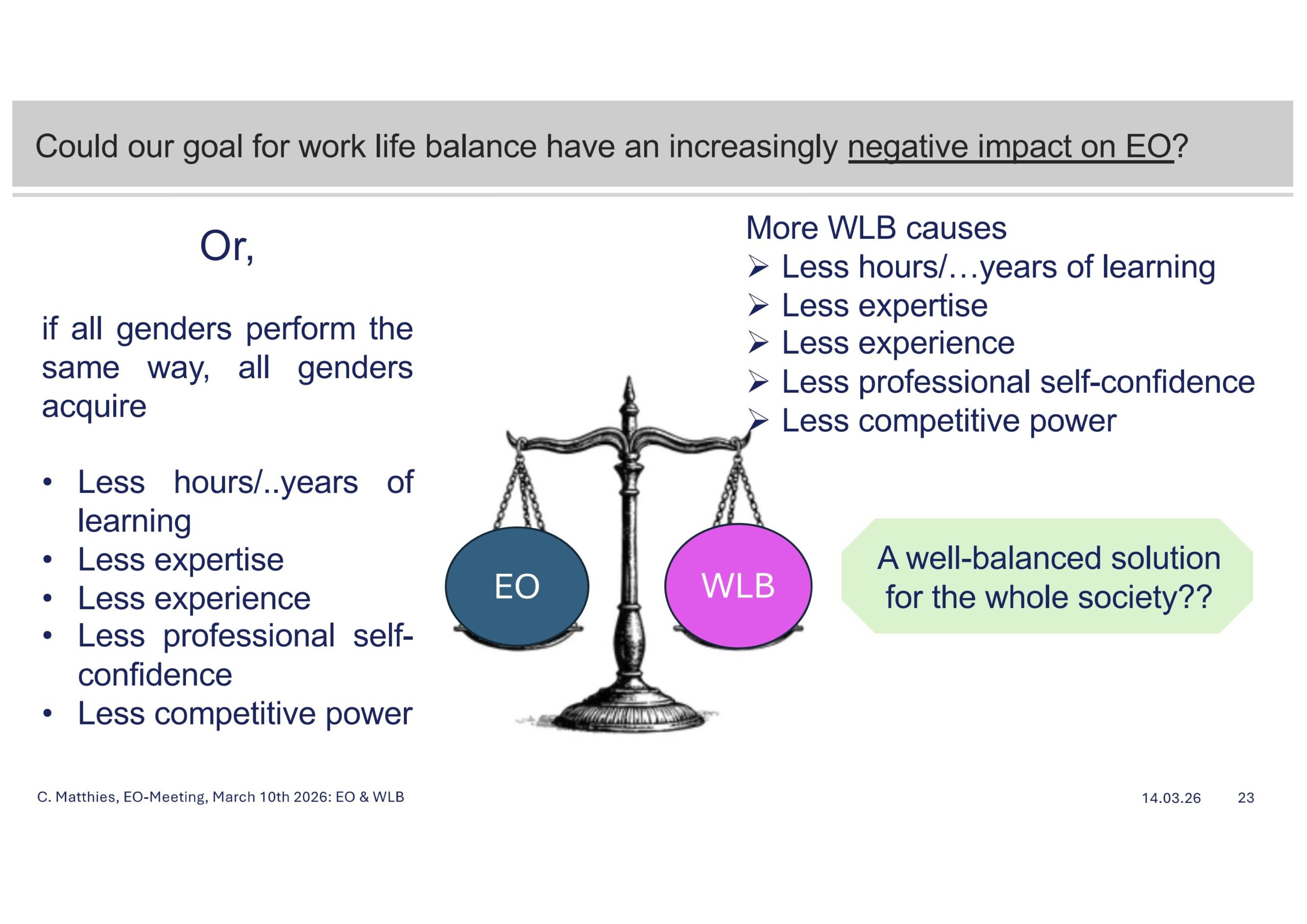
Following the presentation of the studies, the discussion turned to a broader question: How can excellence be developed while promoting equal opportunity? The idea that equal opportunity matters, both for individuals and for society, has often been articulated by those who recognize their own potential and wish to take responsibility. To shape the future, drive change, and foster development, institutions need committed professionals with talent, creativity, and the willingness to take on leadership roles.
A practical challenge raised during the discussion concerned reduced working hours. Possible ways to compensate for this include longer overall working lives, delayed retirement, and increased workforce participation. At the same time, institutions may need more administrative structures and dedicated personnel to support these changes. The meeting concluded by inviting participants to revisit the question posed at the beginning: After hearing the evidence and perspectives presented, has your view on the relationship between equal opportunity and work–life balance changed?
References:
Wiemer, L, Knipper, S, Herlemann, A et al. Vereinbarkeit von Familie und Beruf für Ärztinnen in Deutschland am Beispiel der Urologie. Urologie 64, 157–164 (2025). https://doi.org/10.1007/s00120-024-02439-8
Nottberg VI, Klingelhöfer L, Schweitzer NI, Keller-Yamamura S, Hackert T, Molwitz I, Bardenhagen J, Heumann A. Structural barriers to work-family reconciliation in surgery: a gendered analysis of career disruption and care responsibilities. Updates Surg. 2026 Feb 6. doi: 10.1007/s13304-025-02489-3. Epub ahead of print. PMID: 41649725.
Shorey S, Gan YH, Cavert MS, Archuleta S. Is medical school culture conducive to women’s academic success? a survey on faculty perceptions and experiences of gender equity. BMC Med Educ. 2024 Dec 18; 24(1): 1462. doi: 10.1186/s12909-024-06470-3. PMID: 39696357; PMCID: PMC11653761.
Ruzycki SM, Freeman G, Bharwani A, Brown A. Association of physician characteristics with perceptions and experiences of gender equity in an academic Internal Medicine Department. JAMA Netw Open. 2019; 2(11): e1915165.
Westring AF, Speck RM, Sammel MD, Scott P, Tuton LW, Grisso JA, Abbuhl S. A culture conducive to women’s academic success: development of a measure. Acad Med. 2012; 87(11): 1622–31.
Nerurkar NK, Shah G, Sarkar A. Gender Discrimination in Otolaryngology: A Cross-Sectional Survey in India. Indian J Otolaryngol Head Neck Surg. 2025 Jan; 77(1): 298-303. doi: 10.1007/s12070-024-05174-w. Epub 2024 Nov 6. PMID: 40066424; PMCID: PMC11890638.
Le Rhun E, Boele F, Minniti G, Galldiks N, Taphoorn M, Piil K, Rudà R, Niclou SP, Geurts M, Preusser M, Weller M, Short SC, Dirven L. Gender balance and suitable positive actions to promote gender equality among healthcare professionals in neuro-oncology: The EANO positive action initiative. Neurooncol Pract. 2023 Oct 3; 11(1): 46-55. doi: 10.1093/nop/npad064. PMID: 38222048; PMCID: PMC10785600.
Marx, C.K.; Diewald, M. What Works? How Combining Equal Opportunity and Work–Life Measures Relates to the Within-Firm Gender Wage Gap. Soc. Sci. 2022, 11, 251. https://doi.org/10.3390/socsci11060251
Slides and Presentation: Prof. Dr. Cordula Matthies
Blog written by: Natalie Bernau